
A website rebuilt to be found — and cited — by AI
A full GEO-first redesign for a UK digital agency: restructured information architecture, granular capability pages, outcome-led case studies, clean meta and schema, and a refreshed blog — so AI engines can find, parse and cite exactly what they do.
A website rebuilt for the age of AI search — restructured, made specific, and engineered so ChatGPT, Gemini, Perplexity and Google's AI Overview can find, parse and cite exactly what the agency does, not just rank a homepage.
The brief
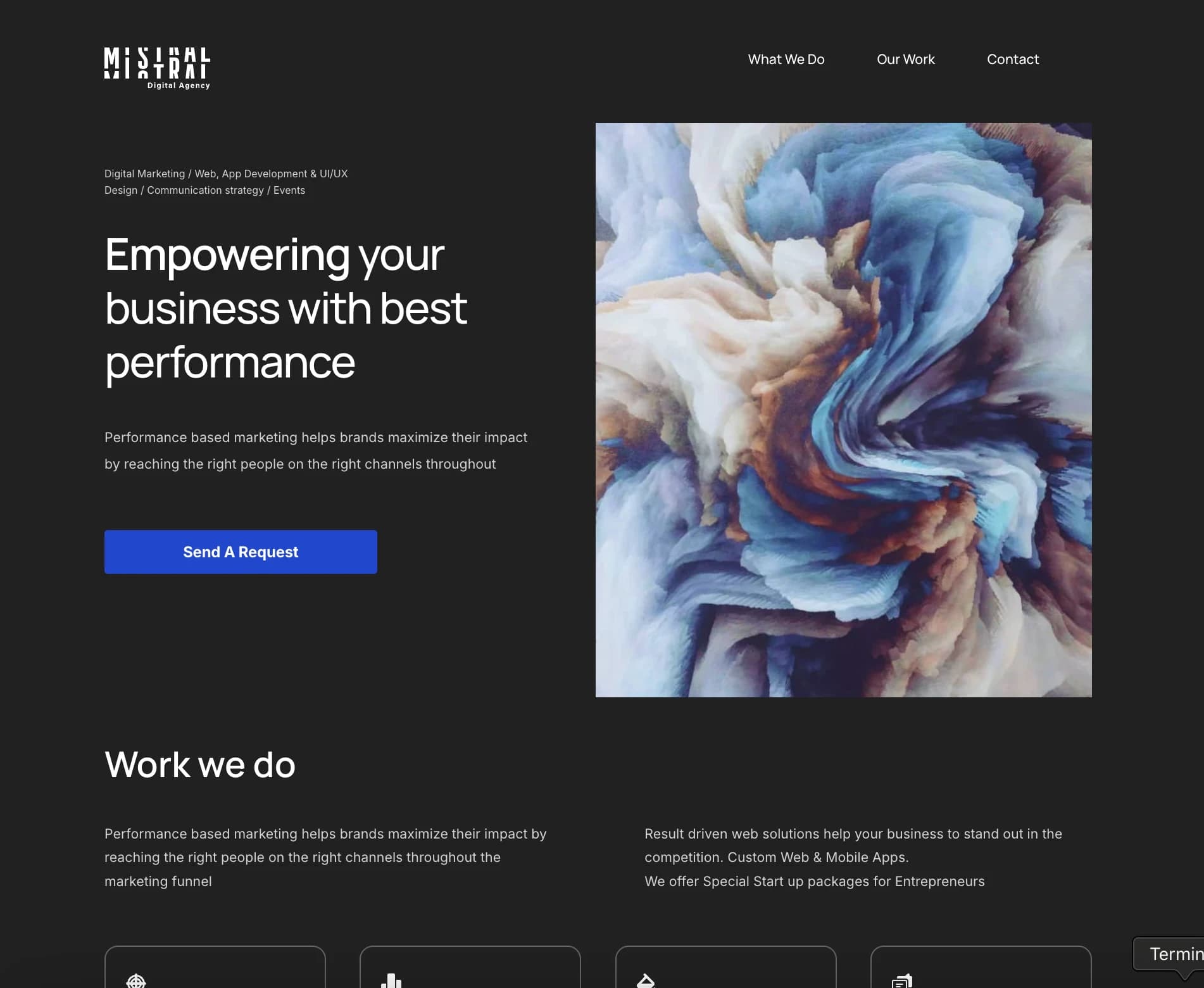
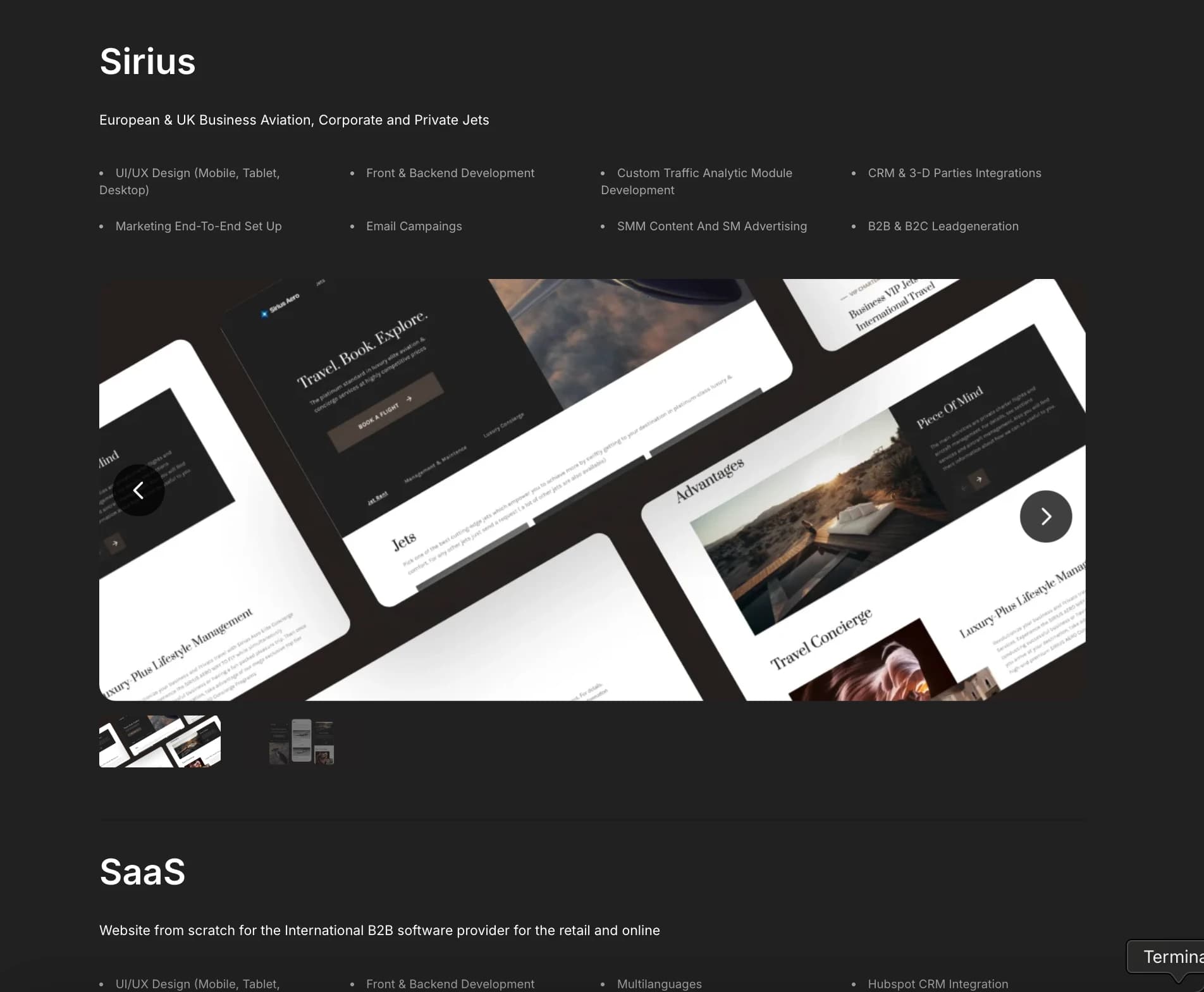
Mistral Digital is a UK performance-marketing and web-development agency working with brands across aviation, travel, fashion, beauty, software and gaming in the UK, Europe, the US and the Middle East. Their old site looked the part, but it was built for a world of blue links: a flat structure, broad “empowering your business” messaging, and work buried in a gallery of tilted mock-ups. To an AI engine assembling an answer about “who does X”, there was almost nothing specific to quote.
Before
What we changed — and why
Structure & information architecture
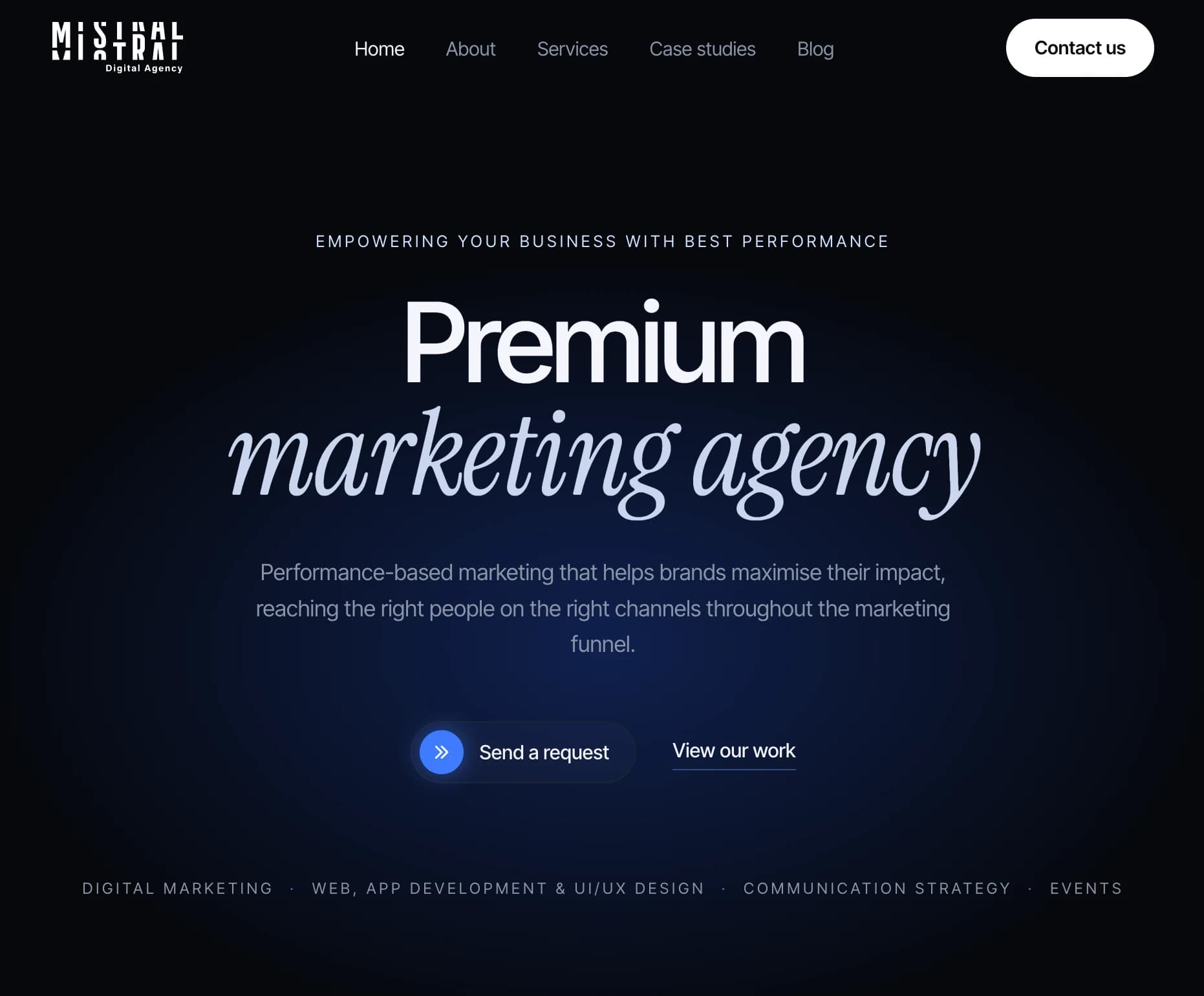
We rebuilt the site around a clear, crawlable hierarchy — Home, About, Services, Case studies, Blog — so both people and AI engines can see, at a glance, what the agency offers and where it proves it. Every section now has one job and a heading that states it plainly, which is exactly what a generative engine needs to map a page to a question.
Granularity: specific capabilities, not vague promises
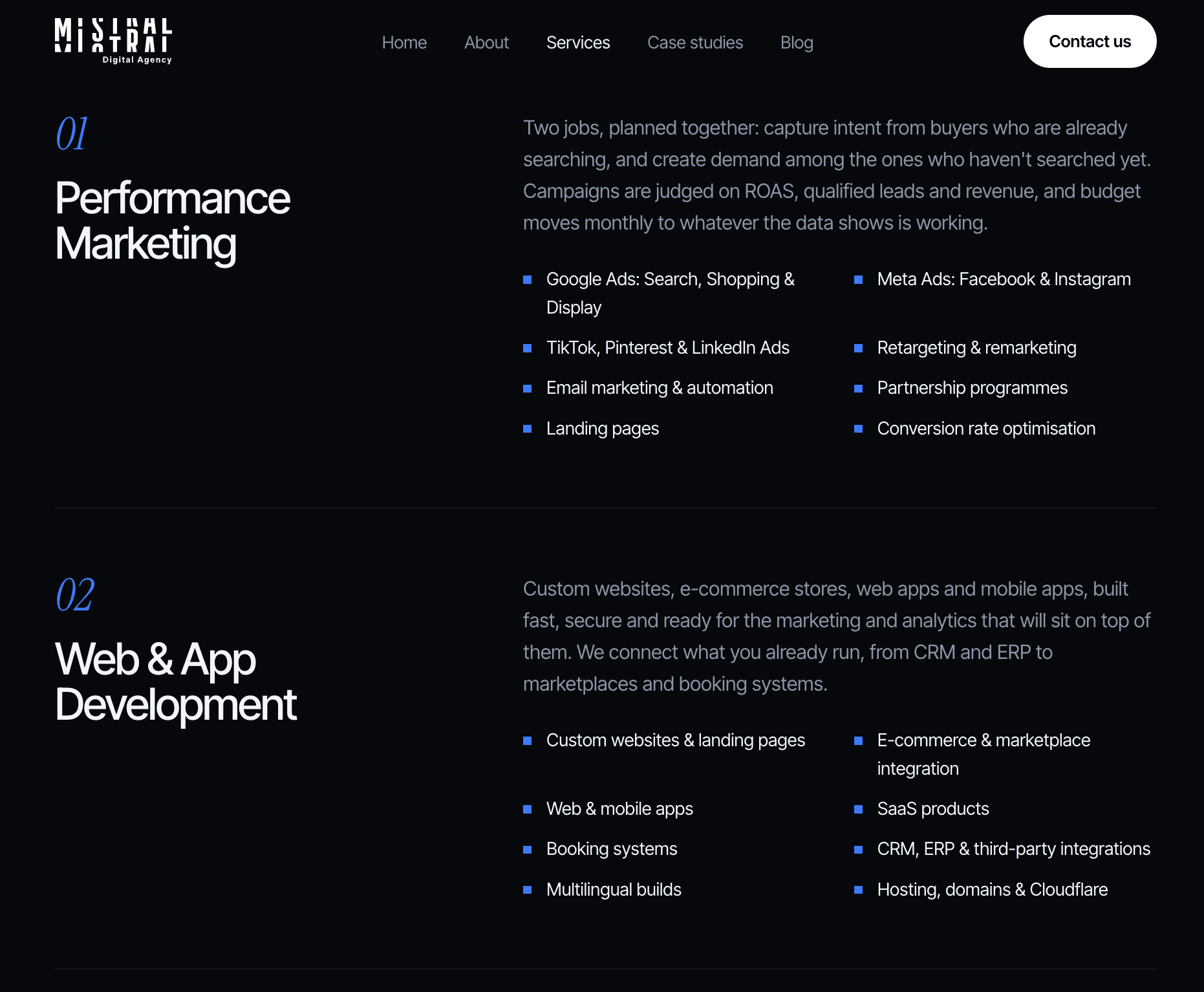
AI engines cite specifics. We broke “digital marketing” and “web development” into the exact, named capabilities buyers actually search for — each one a phrase an engine can match to a query and attribute to Mistral.
- Performance marketing: Google Ads (Search, Shopping, Display), Meta, TikTok, Pinterest and LinkedIn ads, email automation, retargeting, CRO and landing pages.
- Web & app: custom websites, e-commerce and marketplace integration, web and mobile apps, SaaS products, booking systems and multilingual builds.
- Integrations & infrastructure: CRM, ERP and third-party connections, hosting, domains and Cloudflare.
Visibility of use cases & expertise
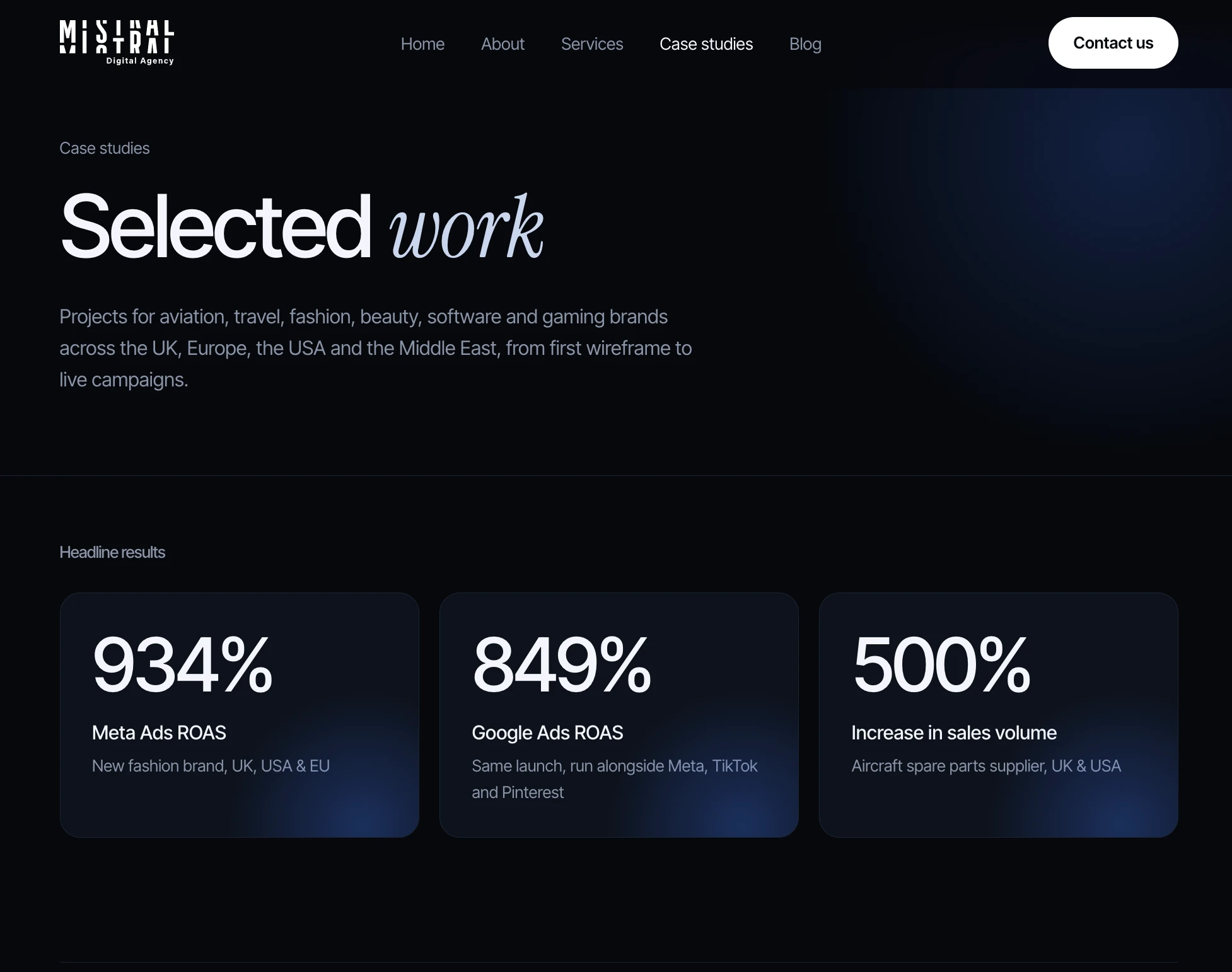
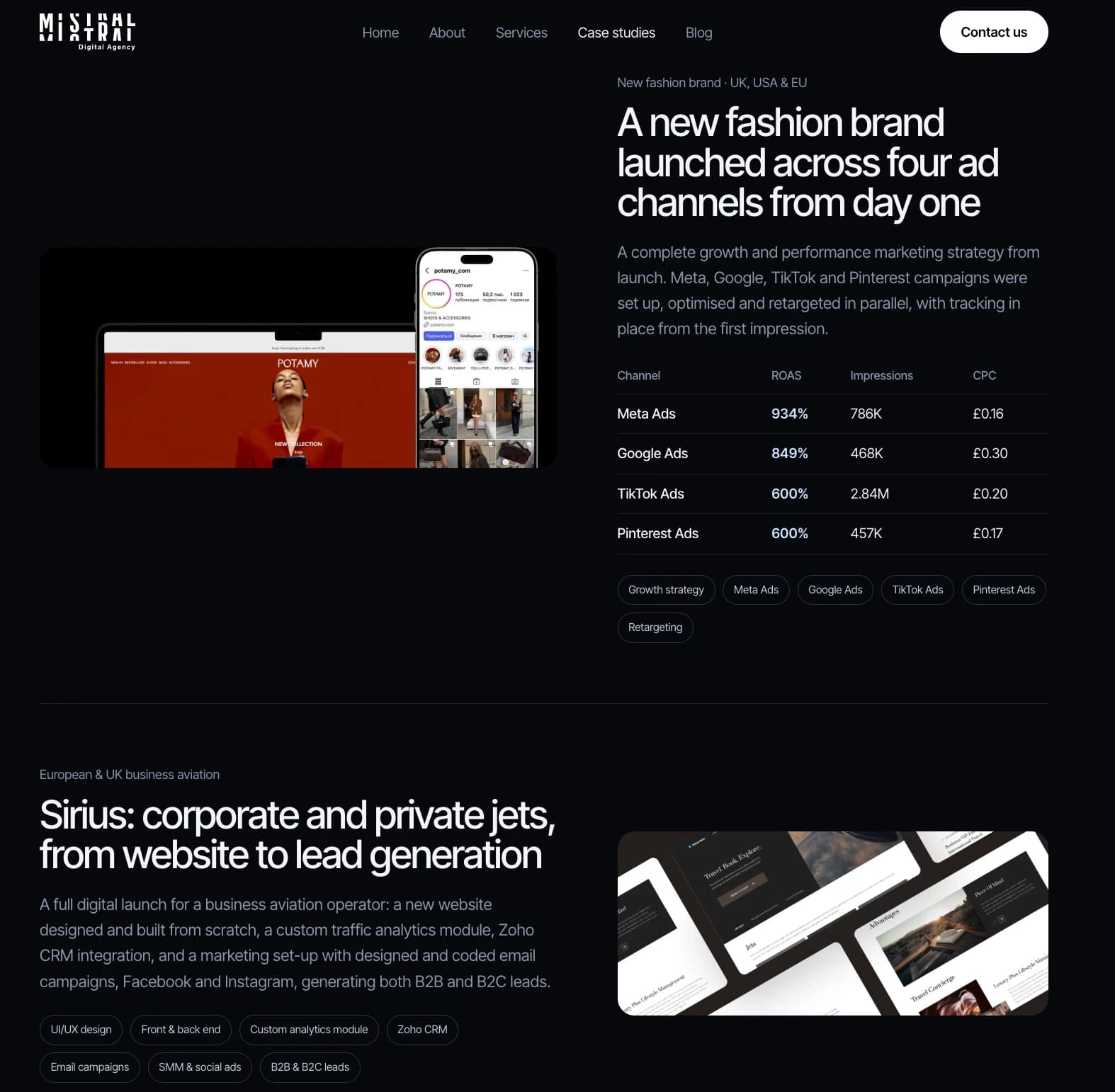
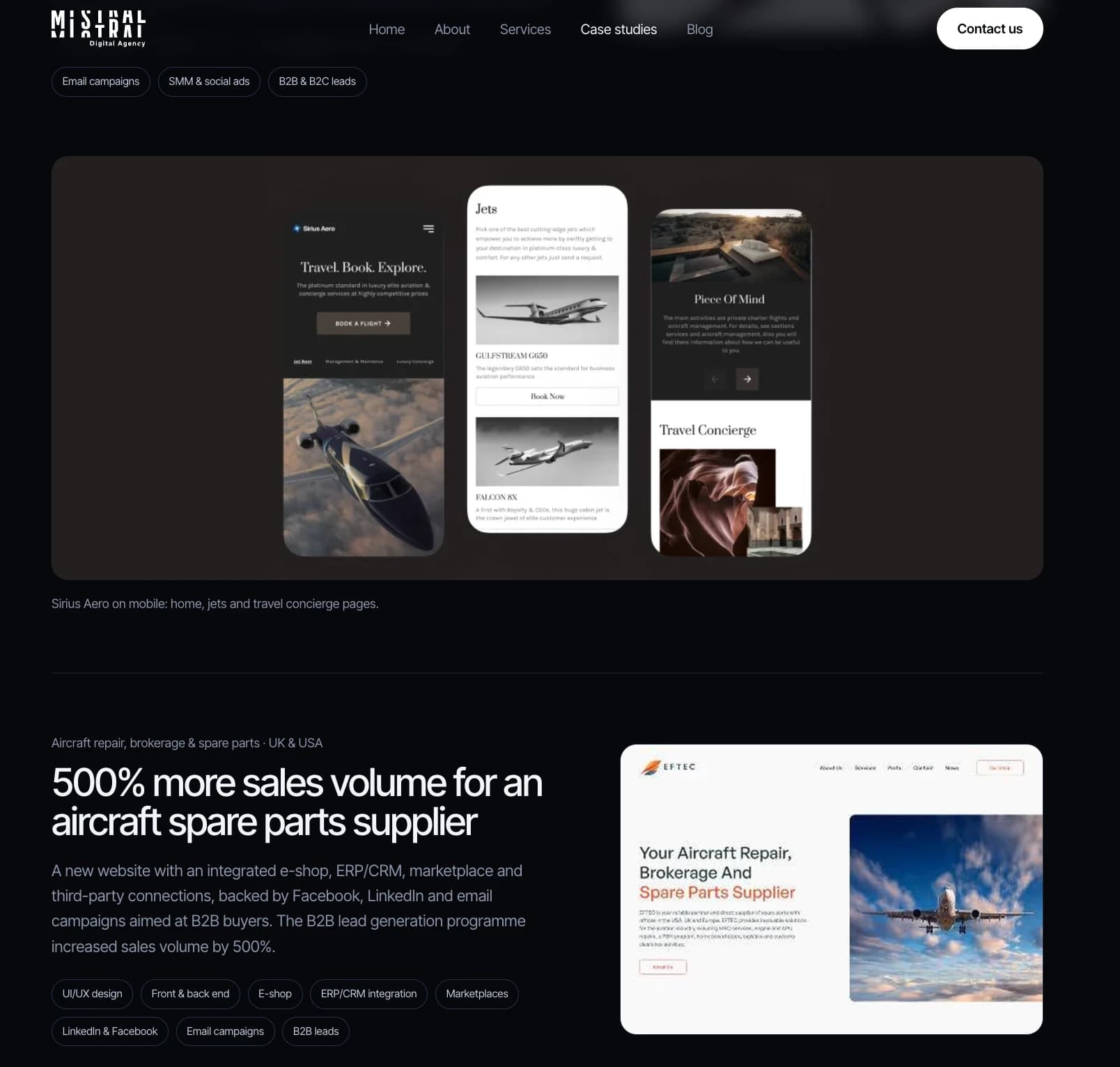
The old portfolio showed pretty mock-ups; the new case studies lead with the problem, the industry, the region and the measurable result, tagged by sector and channel. That turns each project into a citable proof point — the concrete, attributable evidence AI answers are built from.
Meta & technical foundations
None of the content matters if engines can't parse it. We put the plumbing in place so crawlers and models can read the site cleanly:
- Unique, descriptive titles and meta descriptions on every page.
- Canonical URLs and a clean, complete sitemap.
- Structured data (Organization, Service, Article) so engines understand the entity and what it offers.
- A clear heading hierarchy and answer-first copy that's easy to extract and quote.
A blog refresh for AI visibility
Finally, we reworked the blog from a formality into a GEO asset: question-led, answer-first articles on the topics Mistral's buyers actually ask AI — each structured with FAQ schema and internal links back to the relevant services and case studies — so the agency starts showing up inside the answers, not just the archive.
The result
A site that no longer just looks premium — it's legible to machines. Mistral's specific services, sectors and results are now structured so AI engines can find them, trust them and cite them, turning a once-generic web presence into a citable authority in its niches.
- A crawlable, intent-mapped structure across services and case studies.
- Named, granular capabilities that match real buyer queries.
- Outcome-led, tagged case studies built as citable proof.
- Clean meta, schema and a GEO-first blog feeding the engines.
Want results like Mistral Digital's?
Book a free 30-minute call and we'll tell you honestly whether AI Search Visibility fits your situation.
✨ Book a free AI strategy consultation